

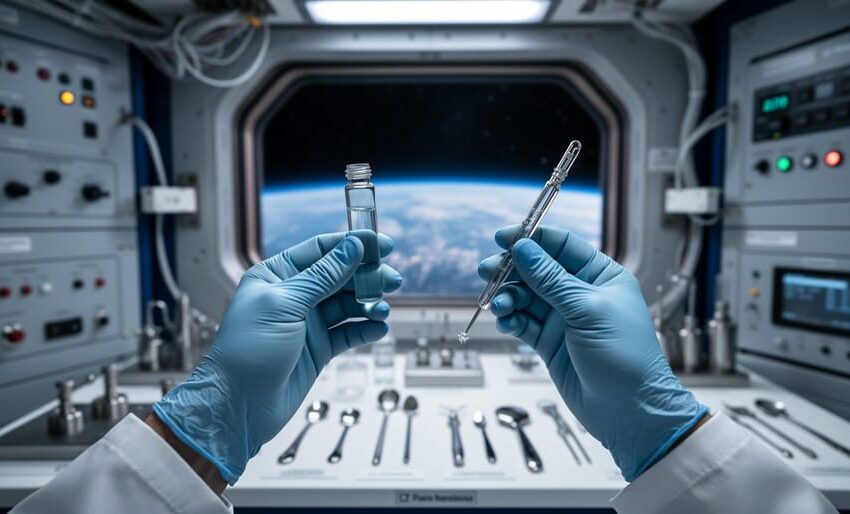
Protein and peptide experiments on the International Space Station let researchers watch molecules behave without the pull of gravity masking their natural patterns. On Earth, gravity drives convection and sedimentation, which can distort how protein crystals grow. In microgravity, those crystals often form larger and more orderly, giving scientists sharper structural data to design better drugs. Peptides, the short amino acid chains behind many modern therapies such as https://researchedpeptides.ca/product/retatrutide/ can be studied the same way, revealing how they fold, stabilize, and interact with their targets.
That’s the core reason the work happens in orbit, and it has a track record that supports it. Orbital crystal growth has informed research into conditions like muscular dystrophy and cancer, and the findings keep feeding back into laboratory methods used on the ground.
This guide explains what the field covers, who can propose an experiment, how applications and hardware integration work, what rights and obligations come with flying research, and where to find help. The biggest section digs into the results themselves and what they mean for medicine. Join our community forums to compare notes with other readers, and subscribe to the newsletter to follow new findings as they’re published.
What Protein and Peptide Research in Orbit Actually Is

Why Gravity Gets in the Way on Earth
On Earth, gravity quietly sabotages crystal growth. When a protein crystal forms in a liquid, it changes the density of the solution right around it. Heavier fluid sinks and lighter fluid rises, creating tiny currents called convection. These currents sweep fresh protein toward the crystal unevenly, so some faces grow faster than others and flaws creep in.
Sedimentation adds a second problem. As crystals grow, they get heavier than the surrounding liquid and drift downward. They can settle on the container floor, bump into one another, or clump together, which leaves you with messy clusters instead of clean, single crystals.
Microgravity changes the picture. In orbit, the environment removes convection and sedimentation as dominant forces, so protein molecules move mainly by slow diffusion. Crystals can settle gently into their lattice, growing more slowly and more uniformly.
That slower pace is the whole point. A well-ordered crystal gives sharper structural data back on Earth. It’s also why researchers keep an eye on upcoming space missions since each flight offers a fresh chance to grow better samples.
Who Can Fly an Experiment? Eligibility and Access to the Station’s Labs
Not every lab can simply ship a vial of peptides to orbit, but the door is wider than many people assume. Access to the station’s research facilities generally opens to four groups: government-funded researchers, academic teams, commercial users, and international partners. Each group reaches the station through a slightly different route, though the underlying logic is the same. Your experiment has to need microgravity, and it has to be safe and practical to run there.
Government-funded scientists often enter through national lab programs or direct space agency partnerships. Universities can join them, either as the lead team or as collaborators on a larger project. Companies, from small biotech startups to established pharmaceutical firms, usually go through commercial service providers. These providers handle hardware, paperwork, and launch logistics on the customer’s behalf. International researchers typically work through their own country’s space agency, which coordinates participation with the station’s partner agencies. If you’re new to the field, this microgravity research context can help you see how orbital science fits into the wider picture.
Whichever route you take, reviewers tend to weigh a similar set of questions:
- Does the research genuinely depend on microgravity, rather than just benefit from novelty?
- Does the proposal show clear scientific merit and a testable hypothesis?
- Can the samples and hardware meet strict safety and compatibility standards?
- Are funding and any required partner arrangements in place?
- Is the team prepared to meet data-sharing and reporting expectations?
Notice that the first point matters most. A protein crystallization study that gains nothing from reduced convection is hard to justify when crew time and launch space are limited. A strong application explains exactly why gravity is the obstacle.
Specific eligibility rules, funding mechanisms, and calls for proposals change over time, and they differ between agencies and providers. Treat this section as a map of the terrain rather than a rulebook. Before you plan anything, confirm the current requirements with the official sources listed later in this article, such as space agency research offices and national lab program teams. Students and early-career researchers shouldn’t be discouraged either. Many first flights begin as university collaborations, so a conversation with your institution’s research-support office is a sensible first move.

How to Apply: Taking an Experiment from Idea to Orbit
Why Samples Must Survive the Round Trip

A protein crystal is a delicate thing, and its journey doesn’t end when it forms in orbit. Before it ever grows, the sample has to survive launch. Rockets shake hard, and vibration can disturb carefully prepared solutions before the experiment even begins. Teams plan around that, much like the careful sequence of launch and testing that any spaceflight hardware goes through.
Temperature is the next hurdle. Many proteins and peptides break down if they get too warm or freeze unexpectedly, so samples ride in controlled, insulated containers from the lab bench to the station and back again.
Then comes handling. Crystals grown slowly in microgravity can be larger and better ordered, but they’re also fragile. A rough landing or a rushed unpacking can crack them, which undoes weeks of careful growth.
Timing matters too. Every day between growth and analysis on Earth is a day the crystal might degrade. That’s why researchers plan sample return and analysis as one connected chain, not separate steps.
What the Experiments Have Taught Researchers on Earth
Sharper Structures, Smarter Drug Design
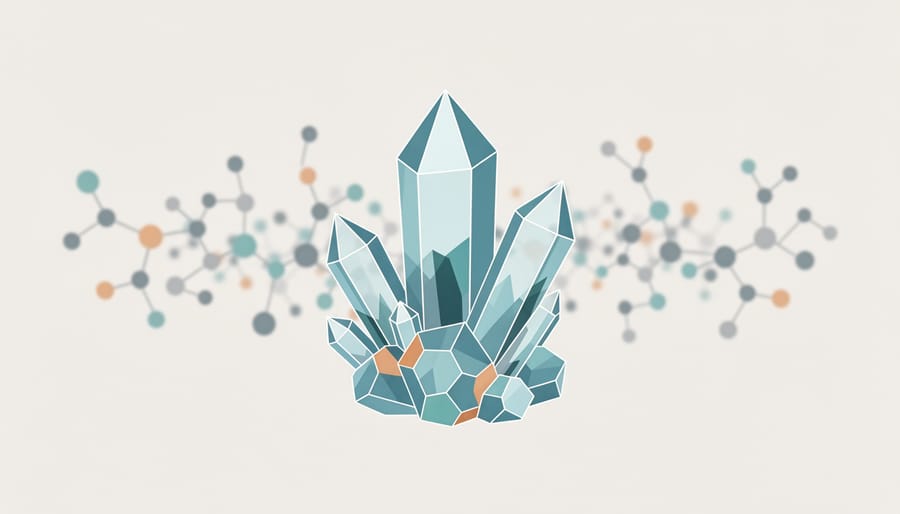
A protein crystal is a repeating lattice of molecules, and the quality of that lattice sets the quality of the data. When researchers fire X-rays at a crystal, the beams scatter into a pattern, and that pattern is turned into a three-dimensional map of the protein. Larger crystals with fewer flaws scatter more sharply. The result is higher resolution, meaning scientists can place individual atoms with more confidence.
Why does that matter for medicine? Most drugs work by fitting into a specific pocket on a protein, called a binding site, much like a key in a lock. If the map of that pocket is blurry, designing a molecule that fits it is partly guesswork. A crisp map shows the exact shape of the pocket, which amino acids line it, and where water molecules sit nearby. Chemists can then adjust a drug candidate to grip the target more tightly or avoid similar proteins elsewhere in the body.
Microgravity doesn’t guarantee better crystals for every protein. Some grow no differently than they do on the ground. But for certain hard-to-crystallize targets, orbital growth has produced crystals that diffract better than their Earth-grown counterparts. Even a modest gain in resolution can reveal a detail that changes how a team approaches a design problem, saving months of trial and error in the lab.
Peptides, Aging, and Disease Models
Astronauts offer an unplanned preview of aging. Without the constant pull of gravity, muscles weaken and bones lose density at rates that resemble processes seen in older adults on Earth, only much faster. That makes the station a useful setting for studying how proteins and peptides, the short chains of amino acids that act as signals and building blocks in the body, behave when mechanical load disappears.
Researchers can examine how these molecules change in orbit, then compare them with samples from people dealing with muscle wasting or osteoporosis on the ground. Some experiments look at signalling pathways that tell cells to build or break down tissue. Others use cell cultures or tissue models, so scientists can watch molecular responses without waiting for years of natural aging.
It helps to be realistic about what this shows. Orbital findings are not cures, and a pattern seen in space does not automatically translate into a treatment. Researchers treat the results as clues that suggest which proteins deserve closer study, which then need testing on Earth through careful, repeated work.
For now, this research is ongoing. Each dataset adds a piece to a larger picture of how the body senses gravity and responds when it’s gone.
What Participants Can Expect: Rights, Obligations, and Data Ownership
Flying an experiment brings a bundle of rights and duties, and they tend to come as a package. On the rights side, researchers generally keep ownership of the discoveries their own work produces, though how intellectual property is handled, and what access the funding agency or implementation partner retains, depends on the funding source and the contract. Commercial users often negotiate tighter control over proprietary data. Academic and government-funded teams are more likely to be expected to share what they learn.
Publication and data-sharing expectations usually follow the money. Publicly funded projects commonly require that results reach the scientific community, often within a set period after the samples come home. That openness matters because the most valuable results are sometimes the ones nobody planned for. Many orbital teams have stumbled on unexpected discoveries while analyzing data collected for a different purpose, and shared datasets give other labs the chance to spot them too.
Obligations are just as concrete. Every payload must clear safety and compliance review, covering things like containment of biological or chemical materials and hardware certification. Crew time is scarce, so experiments are designed to need as little astronaut hands-on time as possible, and the allotted minutes are strictly limited. Teams should also expect reporting duties, including progress updates, post-flight summaries, and documentation of any anomalies during the mission.
None of these terms are universal. Your exact rights and duties live in the program agreement, so confirm the details with the official sources covered in the next section before you plan around them.
Where to Get Help and Stay Connected
Getting an experiment from idea to orbit takes a team, and nobody has to do it alone. Several kinds of organizations exist to help, and each one covers a different part of the journey.
- Space agency science offices, which can explain research priorities and partnership routes.
- National lab programs, which manage access to the station’s research facilities for U.S. users.
- University research offices, which help with funding, compliance, and proposal paperwork.
- Commercial payload providers, which supply hardware, integration, and flight services.
- Our community forum and newsletter, where you can compare notes with other readers.
If you’re based in Canada, start with the Canadian Space Agency’s research and science pages, which outline how academic and industry teams connect to station opportunities. For a broader view of Canada’s space role including how the country partners with other nations, that history offers useful context before you reach out.
Always confirm eligibility, timelines, and terms directly with the official source, because programs change and this article can’t replace current guidance. A short email to a program office often saves weeks of guesswork.
Once you’ve got your bearings, come talk to us. Our community forums are a friendly place to ask questions about orbital biology, swap reading tips, and follow new findings as they emerge. Subscribe to the newsletter, and we’ll send ongoing coverage straight to your inbox.
Common Questions About Space Station Protein Research
Readers tend to ask the same handful of questions about this research, so here are plain answers to the most common ones.
Why can’t Earth labs replicate this?
Gravity drives convection and sedimentation in a liquid, which stirs and disturbs growing crystals. Earth labs can reduce these effects with clever techniques, but they can’t remove gravity itself.
Do all proteins crystallize better in space?
No. Some proteins show clear improvements in crystal quality, while others look much the same as their ground-grown counterparts. Researchers usually test on Earth first to judge whether a protein is a good candidate for orbit.
How long do experiments take?
The timeline varies widely by program and experiment. Planning, safety review, and hardware integration come first, followed by launch, crystal growth on orbit, sample return, and analysis, so the full cycle often spans many months or longer.
Can students take part?
Often, yes, though the route depends on the program. Many space agencies and educational initiatives run student-focused opportunities, and students can also join university research teams that fly experiments. Check official program pages for current details.
Are results used in real medicines?
Orbital findings mainly feed the early stages of drug discovery, such as clearer structures that help scientists understand how a molecule binds its target. Turning that insight into an approved medicine involves many more steps on the ground, so no single result should be read as a finished treatment.
If one of these answers raises a new question, that’s a good sign. Orbital biology is a young field, and curious readers help it grow. Bring your questions to our community forums, where space enthusiasts, students, and working researchers swap ideas, and subscribe to the newsletter to follow new findings as they emerge.
A crystal smaller than a grain of salt can carry a surprising amount of weight. Grown slowly in microgravity, it settles into a cleaner, more orderly shape than most Earth-bound attempts, and that order is what lets scientists read a protein’s structure in fine detail. From there, the story moves down to the ground: sharper maps of binding sites, smarter ideas for drug design, and fresh questions about muscle loss, bone loss and disease.
That is the heart of what protein and peptide experiments on the space station teach researchers on Earth. Orbit isn’t a shortcut or a gimmick. It’s a different set of conditions that lets familiar molecules show us something new.
Curious about the next steps? Join our community forums to swap questions and ideas about orbital biology, and sign up for the newsletter to follow the research as it unfolds.