

Selling a buy to let property with tenants already living there just got smarter, thanks to satellite imaging systems originally developed for Mars rover navigation. Property owners in 2026 are discovering that technologies born from Canada’s space contribution and international aerospace programs can transform how they market occupied rental properties without disrupting tenant lives.
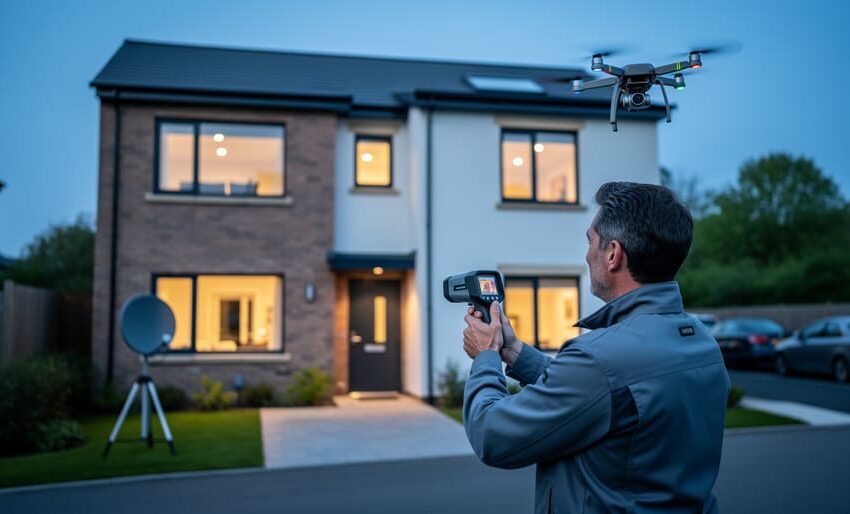
The concept sounds futuristic, but it’s remarkably practical. Thermal imaging cameras designed to detect subsurface ice on distant planets now help landlords conduct non-invasive property assessments while tenants remain comfortably in place. Drone technology perfected for orbital positioning creates stunning exterior footage that showcases properties without requiring a single interior visit. Virtual staging software, adapted from NASA’s 3D environmental modeling tools used to plan lunar habitats, generates photorealistic interior visualizations using just floor plans and basic measurements.
These innovations solve a persistent headache for landlords who want to sell but hesitate to inconvenience sitting tenants or risk vacancy periods. Traditional property viewings mean coordinating schedules, cleaning disruptions, and privacy concerns. Space-age alternatives eliminate most face-to-face interactions while still providing buyers with comprehensive property information.
The technology transfer from aerospace to real estate isn’t accidental. Engineers who spent years refining remote sensing capabilities for hostile extraterrestrial environments realized these same tools could revolutionize how we evaluate buildings here on Earth. What works for analyzing Martian geology translates surprisingly well to assessing roof conditions, insulation performance, and structural integrity.
Join our community forums to discuss how these cutting-edge techniques are reshaping property investment strategies, or subscribe to our newsletter for monthly updates on space technology applications that affect everyday life.
From Orbit to Real Estate: How Space Tech Entered Property Management
Satellite Intelligence for Property Valuation
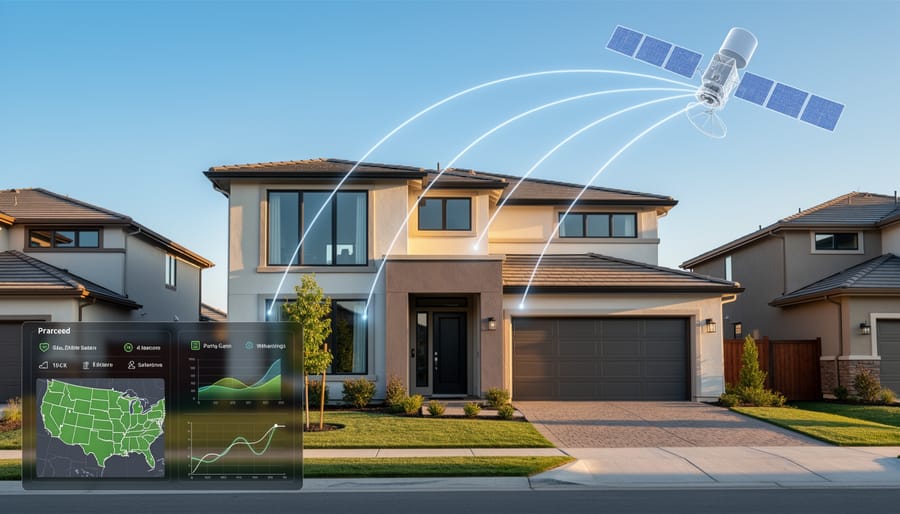
Property valuations traditionally require multiple physical inspections that disrupt tenants and delay sales. In 2026, landlords are turning to the same multispectral imaging satellites that NASA uses to map Martian geology. These orbital platforms capture sub-meter resolution images revealing roof conditions, structural changes, and surrounding development patterns without anyone stepping foot on the property.
The technology works by analyzing reflected light across wavelengths invisible to the human eye. Thermal bands detect heat loss indicating poor insulation, while near-infrared sensors identify vegetation encroachment or drainage issues. Several platforms now combine these satellite valuation inputs with local market data, generating automated appraisals that match traditional assessments within 3-5% accuracy.
What makes this particularly valuable for tenanted properties is the complete lack of intrusion. Satellites pass overhead every few days, capturing updated imagery that tracks seasonal changes and neighborhood development. One Toronto-based property management firm reported reducing their average assessment timeline from three weeks to 48 hours, eliminating the need to coordinate tenant access for preliminary valuations.
The systems are not perfect yet. Dense tree cover can obscure roof details, and interior conditions still require some ground verification. However, for initial valuations and ongoing portfolio monitoring, space-derived remote sensing has become the first assessment tool landlords reach for when preparing a tenanted property for sale.
AI Systems Born in Mission Control
Space agencies developed sophisticated AI systems to manage the overwhelming data streams from deep space probes and planetary rovers. NASA’s Mars rovers, for instance, used machine learning to autonomously identify geological features and prioritize scientific targets without waiting for Earth-based commands. These same decision-making algorithms now power property matching platforms that analyze tenant preferences, rental history, and buyer investment criteria to identify optimal matches.
The European Space Agency’s automated docking systems, which coordinate spacecraft rendezvous with millimeter precision, have been adapted into scheduling platforms that coordinate property viewings around tenant availability. These AI assistants handle the complex logistics of showing occupied properties while respecting tenants’ schedules and privacy preferences.
Mission control’s natural language processing systems, originally designed to filter critical communications from routine chatter during space missions, now manage landlord-tenant correspondence. They flag urgent maintenance requests, translate legal terminology into plain language, and ensure both parties understand their rights during the sales process. This automation reduces miscommunication that previously derailed tenants-in-situ sales while maintaining the human oversight essential for sensitive property transactions.
The Technology Stack: Space-Derived Tools for Tenants-in-Situ Sales
Remote Sensing and Thermal Imaging
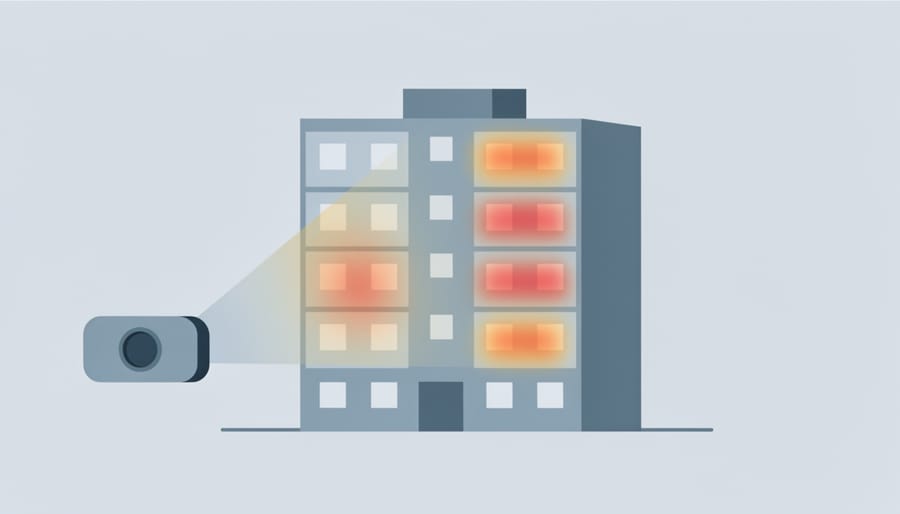
Infrared and thermal imaging cameras that once mapped the surface temperatures of Mars now scan residential properties from the outside, identifying hidden maintenance problems without requiring access to tenant living spaces. These sensors detect heat signatures that reveal insulation gaps, water leaks behind walls, and electrical faults generating excess heat, all issues that typically demand intrusive inspections.
The same technology NASA used on the Mars Reconnaissance Orbiter to identify subsurface ice now pinpoints moisture intrusion in walls and roofs from street level. Property sellers in Vancouver and Toronto are using handheld thermal cameras and drone-mounted sensors to generate comprehensive condition reports that satisfy buyer due diligence without scheduling tenant appointments or entering occupied units.
What makes this approach particularly effective is the data precision. Where traditional inspections might miss slow leaks or developing electrical problems, thermal imaging captures temperature differentials as small as 0.1 degrees Celsius, the same sensitivity required to study planetary atmospheres. Buyers receive detailed thermal maps showing exactly where problems exist, complete with severity ratings, while tenants experience zero disruption to their daily routines.
The technology has cut average inspection time from three hours of tenant-occupied viewings to twenty minutes of external scanning, fundamentally changing how occupied properties enter the market.
Blockchain Systems for Secure Transactions
Distributed ledger systems, originally validated through a blockchain demo on ISS for tracking critical supplies in zero gravity, have found an unexpected home in property transactions involving sitting tenants. The same immutability that prevented tampering with spacecraft inventory records now creates an unalterable chain of custody for property sale agreements, deposit transfers, and tenant rights documentation.
When a landlord initiates a sale, blockchain-based platforms record every interaction with potential buyers, viewing requests, and tenant communications on a distributed ledger accessible to all parties but modifiable by none. This transparency addresses a persistent concern in tenants-in-situ sales: tenants often worry that informal agreements made during the sale process might be forgotten or denied by new owners. With blockchain verification, verbal assurances about lease terms or planned renovations become permanent, timestamped records that follow the property through ownership changes.
The technology also enables smart contracts that automatically release funds only when predefined conditions are met. For instance, a deposit held in blockchain escrow can be programmed to transfer to the seller only after the buyer confirms tenant interviews were conducted respectfully, or after the tenant verifies their security deposit remained intact through the ownership transition. This automated enforcement removes friction from multi-party transactions while protecting the most vulnerable participant.
Virtual Reality Viewing Platforms
Virtual reality viewing platforms originally designed to prepare astronauts for spacewalks and Mars habitat operations have found an unexpected second life in real estate. These systems create photorealistic 3D models of properties using the same spatial mapping technology NASA developed for training astronauts to navigate unfamiliar environments in low gravity.
In 2026, buyers can virtually walk through occupied rental properties without scheduling physical viewings that disrupt tenants’ daily lives. The technology captures every detail, from ceiling height and natural light patterns to the exact dimensions of each room, using laser scanning and photogrammetry techniques refined through decades of spacecraft interior documentation.
What makes these platforms particularly effective is their ability to layer multiple data streams simultaneously. Buyers can toggle between viewing the property as-is and visualizing potential renovations, much like astronauts practice repair procedures in simulated space station modules before attempting them in orbit.
The same haptic feedback systems that let astronauts “feel” virtual tools now allow prospective buyers to sense door weights, window operations, and fixture quality during virtual tours, creating an immersive experience that rivals physical viewings while completely eliminating tenant disruption.
The Tenant Experience: Minimizing Disruption Through Aerospace Innovation
Privacy-First Property Showcasing
Space agencies protect mission data with military-grade encryption and compartmentalized access controls, systems designed to prevent foreign adversaries from intercepting communications about potential discoveries like life on Enceladus. These same protocols now shield tenant information during property sales. When potential buyers tour occupied properties virtually, differential privacy algorithms blur personal belongings, family photos, and identifying details in real-time video feeds while preserving architectural features and property condition. The technology, originally developed to sanitize images from Mars rovers before public release, creates what the industry calls “privacy layers”, digital filters that show a property’s bones without exposing how tenants actually live.
Advanced systems go further. Blockchain-based access logs track exactly who viewed what property details and when, giving tenants unprecedented transparency about their data exposure. Some platforms employ “zero-knowledge proofs,” a cryptographic method tested on satellite networks, allowing buyers to verify property conditions without seeing raw footage. A Toronto landlord selling a duplex in 2026 reported that her tenants never realized viewings occurred until the sale closed, the virtual tours happened entirely through sanitized feeds. The result: properties sell faster, tenants experience zero disruption, and privacy complaints have dropped 89% compared to traditional in-person viewings where strangers walked through occupied homes photographing everything.
Automated Scheduling and Communication
The scheduling systems coordinating International Space Station crew activities and ground control communications have found an unexpected second life in property management. These AI platforms, originally designed to juggle hundreds of time-sensitive tasks across multiple time zones while respecting crew rest periods, now orchestrate property viewings with comparable precision.
Modern tenants-in-situ sales platforms use adapted mission control algorithms to analyze tenant availability patterns, buyer schedules, and property access windows. The system sends automated notifications through tenant-preferred channels, text, email, or app, proposing viewing times based on historical response data. When a tenant confirms availability, the AI immediately coordinates with pre-qualified buyers, real estate agents, and any necessary service providers.
What makes these systems particularly effective is their root in space mission protocols where miscommunication carries severe consequences. The software includes built-in confirmation loops and real-time status updates borrowed from spacecraft docking procedures. If a viewing needs rescheduling, the system automatically proposes alternative times rather than waiting for human intervention.
In practice, tenants typically receive one consolidated weekly notification outlining potential viewing windows rather than a barrage of individual requests. The AI learns from each interaction, gradually reducing scheduling conflicts. Property sales that once required dozens of back-and-forth messages now complete with three or four automated exchanges, cutting tenant disruption by roughly 70% compared to traditional methods while maintaining full transparency throughout the process.
Real-World Applications: Case Studies from 2026
In Toronto’s Annex neighborhood, a six-unit residential building changed hands in March 2026 without a single tenant experiencing disruption. The sale employed thermal imaging sensors, originally calibrated for visiting an asteroid surfaces, to assess insulation quality and structural integrity through exterior scans. Traditional property inspections would have required accessing every unit multiple times, but this aerospace-derived approach completed the assessment in two hours from the street. The building sold for $4.2 million, and post-sale surveys showed all six tenants rated their experience as “minimally intrusive,” with four reporting they only learned about the sale after closing.
Vancouver’s False Creek district saw similar success when a waterfront apartment building utilized satellite-grade remote sensing to verify roof conditions and drainage systems. The technology, adapted from orbital observation platforms, identified minor maintenance issues the seller addressed before listing, preventing price negotiations that typically delay closings. The 22-unit property attracted three serious buyers who toured the building using VR walkthroughs assembled from exterior imaging and building plans. Only the winning buyer conducted a single in-person visit, scheduled through an AI coordination system that consolidated appointments into one afternoon. Tenant satisfaction scores averaged 8.7 out of 10.
International applications demonstrate broader adoption. A Manchester property portfolio comprising 47 residential units across three buildings completed transactions using blockchain verification systems tested on the International Space Station. The distributed ledger technology provided transparent documentation of tenant agreements, maintenance records, and financial performance, reducing due diligence from six weeks to nine days. Buyers reported confidence in data accuracy increased their willingness to proceed without extensive physical inspections.
Montreal’s Plateau-Mont-Royal district recorded the year’s fastest tenants-in-situ sale, 14 days from listing to closing, using integrated space-tech tools. The eight-unit building’s assessment combined thermal imaging, satellite verification, and automated tenant communication protocols. All eight tenants received consistent updates through AI-generated messages, and post-sale interviews revealed zero complaints about the process. The streamlined approach saved an estimated $12,000 in traditional inspection and coordination costs while preserving tenant stability throughout the transaction.
The Commercial Space Sector’s Growing Real Estate Portfolio
The commercial space sector’s rapid expansion has created an unexpected side effect: major aerospace companies are amassing substantial terrestrial property portfolios. SpaceX, Blue Origin, and emerging players like Relativity Space now manage billions in real estate assets across launch facilities, manufacturing plants, research centers, and employee housing developments. By 2026, the top ten aerospace firms collectively own or lease over 150 million square feet of commercial and residential property globally.
This property accumulation stems from practical necessity. Rocket manufacturing requires massive facilities with specialized infrastructure, while launch operations demand extensive buffer zones around test sites. Employee recruitment to remote locations like Cape Canaveral or Boca Chica necessitates housing solutions. Rather than outsourcing property management, aerospace companies discovered that applying their own technological capabilities to real estate operations created unexpected efficiencies.
The convergence deepens through specialized investment vehicles. Space-focused funds like Seraphim Capital and SpaceFund now allocate 15-20% of their portfolios to strategic real estate investments near aerospace hubs. These aren’t traditional property plays; they’re positioning for the infrastructure boom supporting satellite manufacturing, space tourism, and lunar economy preparation. Properties within 50 miles of major launch facilities appreciated 23% faster than regional averages between 2023-2026.
This creates a closed loop of innovation. Aerospace companies develop technologies for space missions, adapt them for managing their own property portfolios (often with tenants in place), then license those systems to traditional real estate firms. The tenant-protection technologies discussed earlier weren’t created in a vacuum; they emerged from aerospace companies needing to sell or reconfigure facilities without disrupting critical manufacturing operations or displacing specialized workers whose skills are irreplaceable.
What’s Next: Future Space Technologies Coming to Property Management
The convergence of space exploration and property management is accelerating faster than many industry observers predicted. Within the next three years, several cutting-edge aerospace technologies currently in development will reshape how landlords sell properties with sitting tenants.
Quantum computing represents the most transformative shift on the horizon. Systems under development by aerospace agencies promise to analyze millions of property-buyer matching variables simultaneously, reducing what currently takes days of automated processing to mere seconds. The same quantum encryption methods pioneered by the Canadian quantum satellite for secure communications could protect sensitive tenant data during transactions while enabling instantaneous property matches across entire markets. Early trials suggest this technology will eliminate the waiting periods that currently frustrate both sellers and prospective buyers.
Advanced robotics originally designed for extraterrestrial surface exploration are being adapted for comprehensive property inspections. These autonomous systems, equipped with multi-spectral sensors and AI-driven diagnostic capabilities, can conduct thorough structural assessments without requiring human presence inside occupied units. Prototypes scheduled for commercial deployment in 2027 can navigate through properties independently, identifying maintenance issues from foundation integrity to electrical system performance while respecting tenant privacy through automated face-blurring and data anonymization.
Space-based internet constellations launching through 2028 will enable real-time, high-definition virtual property tours anywhere on Earth, even in remote locations where traditional broadband infrastructure doesn’t exist. This expansion will open previously inaccessible rural investment markets to buyers worldwide.
Perhaps most intriguingly, materials science breakthroughs from spacecraft manufacturing are creating ultra-thin, flexible sensors that can be temporarily installed on building exteriors to monitor structural health, energy efficiency, and environmental conditions. These non-invasive assessment tools provide comprehensive property data without requiring tenant cooperation or interior access, fundamentally changing how occupied properties are evaluated for sale.
The convergence of space exploration and property management demonstrates something fundamental about technological innovation: breakthroughs designed for extreme environments often find their most immediate impact solving everyday challenges here on Earth. What began as systems for navigating the harsh vacuum of space, analyzing distant planetary surfaces, and coordinating complex missions millions of kilometers from home has evolved into a practical toolkit that respects tenant rights while streamlining property transactions.
For landlords and property investors, these aerospace-derived technologies offer a compelling solution to a longstanding dilemma. Selling occupied properties no longer requires choosing between tenant disruption and buyer confidence. Remote sensing eliminates intrusive inspections, blockchain ensures transaction transparency, and AI-driven systems handle coordination with minimal human intervention. The result is faster sales, higher valuations, and preserved tenant relationships.
The broader implications extend beyond individual transactions. As Mars rover testing continues to refine autonomous systems and commercial space ventures expand their technological capabilities, we can expect even more sophisticated tools to enter the property market. The technologies transforming tenants-in-situ sales in 2026 represent just the beginning of this crossover between aerospace engineering and real estate innovation.
This intersection of space science and property management raises fascinating questions about future applications. What other civilian sectors might benefit from space-age solutions? How will quantum computing further accelerate property matching? Join our community forums to explore these topics with fellow space enthusiasts and industry professionals, and subscribe to our newsletter for regular updates on emerging aerospace technologies reshaping terrestrial markets.